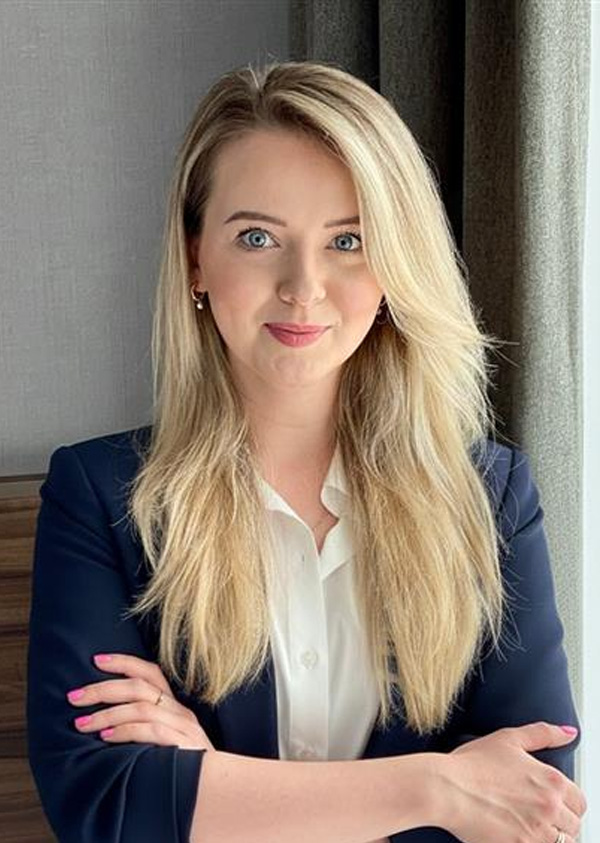
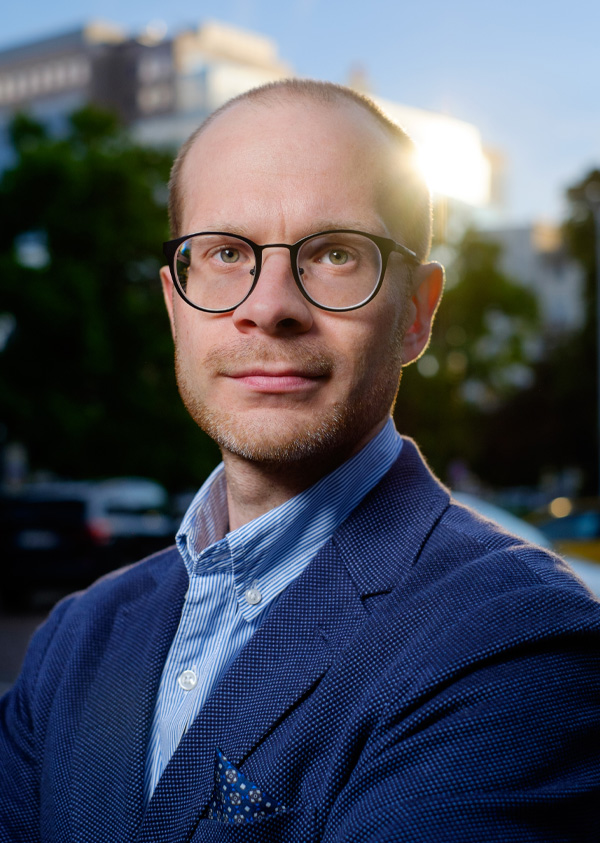
The speakers and panelists included, among others, President of the Management Board of KZBS Krystyna Majerczyk-Żabówka, Vice President of the Management Board of KZBS Michał Krakowiak, Vice President of the Management Board of Asseco Poland Zbigniew Pomianek and CEO of G Rock (Gibraltar) Sławomir Lachowski.Efficient decision-making processes in cooperative banks may face a test due to a digital competition. The use of consumer preference analysis can be a competitive advantage in dealing with other players in the market. Even more profound knowledge of the customers' needs and their lifestyle will be a basis of business strategies in the era of new technologies and increased competition. Therefore, it will be a key factor for further development of attractive and competitive offers for customers - said President of the Management Board of KZBS Krystyna Majerczyk-Żabówka.There are innovations which change the reality entirely. We currently experience them in the banking sector - said CEO of G Rock (Gibraltar) and the founder of the first mobile bank in Poland Sławomir Lachowski. Today, in order to meet customers' needs, the ability to use new technologies is essential. That can be achieved both by fintechs and existing banks - he added.An important point of the meeting was a debate led by Eugeniusz Twaróg from Puls Biznesu on the Internet era in the banking sector and its impact on the customer service directly in the branches.Co-operative banks have an interesting and valuable advantage because they can offer banking services at a certain place and time. However, in the face of current challenges, it is not a sufficient advantage. Therefore, it is worth to verify the current model of action and make an effort to maintain a cooperative identity while using the scale effect to achieve the goals expected by the clients in a faster, more efficient and effective way. The bank of the 21st century is a friendly, intuitive and cheaper bank - one that responds to customers' needs - said Vice President of the Management Board of KZBS Michał Krakowiak. Up until recently, internet marketing has been a distinguishing feature in the market. In a moment, such a distinction for cooperative banks may be a branch, especially in the areas where large banks are not present - said Vice President of the Management Board of Asseco Poland Zbigniew Pomianek. The banks can be supported by IT vendors that monitor market trends closely and offer cutting-edge solutions such as the Asseco Advisory Banking Platform (ABP) - a powerful tool for bankers to help them with staying connected with customers and boosting their sales effectiveness.Marcin Kwilosz from Asseco, in his presentation, mentioned the fact that the omnichannel banking was a strategy to help banks with responding to the challenges of the modern banking market and the needs of customers. He emphasized that it was a strategy which needed to be a backbone of a modern banking, which involved designing customer service processes in order to make them uniform regardless of the communication channel they were in. In turn, Krzysztof Korus, a partner at dLK Korus, Okoń Radcowie Prawni sp.p., presented the challenges and their implications for cooperative banks related to the obligation of the implementation of the PSD2 Directive - a new EU directive regarding the payments in the EU internal market. Cooperative banks will have to adapt their IT systems to the requirements of the new EU rules.The conference participants also had an opportunity to see the latest developments in the IT solutions for the banking sector. The latest "top & hot" rank was presented by Tomasz Leś from Asseco, who mentioned, among others, tools for biometric identity authentication and the onboarding process, as well as platforms for cooperation between banks and fintechs. These platforms are being designed due to the implementation of the PSD2 Directive.

The title was awarded during an official gala held on April 5 in Warsaw. It was attended by the representatives of state institutions as well as IT, financial, logistics, medical, FMCG, and energy sectors.
Asseco Utility Management Solutions is a family of state-of-the-art IT solutions which provide comprehensive services to companies from the deregulated energy market. The system supports the implementation of strategies of energy companies which, in order to compete effectively in a changing market, must ensure, among other things, the ability to create new products, tailor their approach to the needs of key customers, and respond flexibly to market volatility and the actions of the competitors.This is Asseco's another success in Gazeta Bankowa's competition. Last year, Asseco Customer Banking Platform solution was awarded the title of the "Hit of the Year 2016". In addition, in the "Leader of the Year 2015" ranking, in the category of energy, fuels and chemicals, Tauron Obsługa Klienta took the second position for the centralization of billing systems for mass customers. As part of this project, the company, in cooperation with Asseco Poland, has implemented Asseco Utility Management Solutions system.

In June 2017, Jozef Klein will represent Slovakia at the worldwide final of the "EY World Entrepreneur Of The Year" competition in Monaco. Nearly 60 countries will participate in it.

2016 saw Asseco Group achieve record-high sales revenue of nearly PLN 8bn, and a 3% increase in operating profit which now stands at PLN 769m. Some of the elements contributing to such an intense growth were successful foreign investments, a highly diversified client portfolio, and continuous development of our proprietary products and services.Dynamic growth in foreign markets had the biggest impact on the Group results in 2016. Foreign companies’ share in the Group's total revenue increased to 79% (PLN 6.3bn). Year-on-year, this represents an increase of PLN 804m. Moreover, foreign companies generated PLN 511m operating profit, which represents an increase of PLN 44m year-on-year.Sales of proprietary software are instrumental to record-high results. Revenue within this category now stands at PLN 6.4bn, which represents a 10% increase year-on-year and accounts for over 80% of total sales. Group revenues are well diversified, both geographically and in terms of sectors. Business sector has the largest share of sales – it accounts for 39% of the total Group revenue. Banking and finance accounts for 39%; and the public sector accounts for 22% of total sales. The Group's order portfolio revenue rose by 10% year-on-year and now stands at PLN 5.5bn.Adam Góral, President of the Board at Asseco Poland: It was a great year for the Asseco Group. We are currently operating on a scale unprecedented for Polish IT companies. We have achieved record-high revenues of nearly PLN 8bn, and an operating profit which stands at PLN 769m. We employ approximately 22 thousand people in over 50 countries around the world. Foreign markets account for 79% of our revenues. We implemented a Group reorganization plan in Poland in 2016. In addition, we continued to grow the Group through acquisition of new entities and increasing our stake in subsidiaries. Over the past 12 months we have further developed our international centers of competence in the areas of ERP, payments, and insurance. We intend to continue these activities in 2017 as well.Asseco Poland is consistently building value for its shareholders. This year the Management Board recommended to pay out a similarly high dividend to the one paid out in 2015.Adam Góral: Excellent financial results and a strong development perspective for the future allowed us to, yet again, recommend a high dividend payout. PLN 250m will be allocated to this end in 2017. Asseco has consistently shared revenues with its shareholders and paid dividends to the tune of over PLN 1.4bn.The dividend recommended by the Management Board translates to PLN 3.01 per share, which in turn means a dividend yield of 5.6% (correct as of the end of 2016).

Góral pointed to the ever so tight co-operation between the banking sector and public administration. The ‘Family 500+’ Program played a crucial role in kick-starting it. Piotr Alicki – President of the Board of the National Clearing House – shared this opinion and further emphasized that the smooth implementation of the ‘Family 500+’ Program was in no small part possible thanks to the cooperation with companies such as Asseco.Adam Góral also touched on the topic of fintechs, stating that banks have a significant advantage over them as institutions enjoying public trust.

Telemedicine is not only an advanced solution that improves treatment. It is also the quickest way of improving the quality of patient care and reducing consultation waiting times. Moreover, it allows for enhanced communication within health centers – one of the improvements is the possibility to conduct inter-departmental consultations without having to physcially move between departments.On the one hand, the development of telemedicine means a better and more efficient patient care. On the other hand it provides hospitals with an opportunity to optimize costs and modernize their current operations. The use of information technology is one of the pillars of the Digital Agenda for Europe, which sets out key initiatives aimed at improving the economic situation and promoting sustainable future in a digital society . According to a study conducted by IDC, more than 65% of health care centers will provide means of contacting patients via mobile devices by 2018, and more than 70% will use applications to track and monitor their patients’ condition .Innovation – linchpin of hospitals modernizationIndependent Public Health Care Complex in Kędzierzyn Koźle is one of the largest hospitals in the Opolskie region. The facility consists of 16 departments and 18 specialist outpatient clinics. It has a surgery unit and a labor unit, as well as a large number of laboratories and diagnostic facilities. Investment in innovation allows the hospital to grow at an impressive pace – it also pioneered the use of IT systems during treatment.Marek Staszewski, Director of the Health Care Complex in Kędzierzyn Koźle: Our patients follow two parallel paths. The first one sees them use the services provided by our hospital, in the following order: registration/ admissions, department/ particular facility, surgical unit, and the diagnostics unit. Simultaneously, an electronic profile of each patient is created within the hospital’s internal network. This electronic profile follows him or her, and often ... is actually much quicker than the patient. It may happen that a patient returning to an outpatient clinic after a CT scan or ultrasound only to be surprised that their results are already on the doctor’s computer screen. This is possible thanks to modern IT solutions that significantly facilitate assessment and treatment.As part of implementing its development strategy and improving the quality of patient care and the work of medical staff, the hospital has decided to implement the Asseco Medical Management Solutions, with an integrated video messenger functionality. The implemented solution will support the management of both its health care activities (HIS), as well as its administrative activities (ERP).As part of the agreement with the hospital, Asseco Poland also provided 20 ‘Skype for Business’ licenses. This will allow staff members to conduct video conferences, including inter-departmental consultations – the Health Care Center in Kędzierzyn Koźle has two locations, about 8 kilometers apart. The chosen solution will also support other medical consultations and meetings.Krzysztof Groyecki, Vice President of Asseco Poland: AMMS is a comprehensive solution for hospitals. We created it knowing the needs of medical staff and patients, but also according to the most important IT trends. Certainly, telemedicine is one of them. That's why I am very pleased that, acting together with Microsoft, we can offer our users video consultations via a modern online messenger such as ‘Skype for Business’.Joint action for the development of telemedicine in PolandThe implementation of the AMMS solution with video consultation capability via ‘Skype for Business’ at the Health Care Facility in Kędzierzyn Koźle is the result of an agreement signed between Asseco Poland and Microsoft Poland in October 2016. It allows for an integration of HIS (Hospital Information Systems) with ‘Skype for Business’ video communication facility delivered by Microsoft.Wojciech Życzyński, Director of Public Sector Sales at Microsoft Poland: The development of telemedicine services is key for sustainable development of entire health care centers. It is also a nod to the patients who are now more likely to actually consult specialists and save time, which often plays a crucial role in quick recovery.
A package of the most important press materials: multimedia, documents and data about Asseco ready to use.


This website uses cookies and other tracking technologies to assist with navigation and feedback, analyze the use of our products and services, support our promotional and marketing efforts, and provide content from third parties. View more cookie settings to manage your preferences.
More information about cookies and data storage can be found in our Privacy Policy.