The goal of the National Health Fund (NFZ) is to provide comprehensive medical care to pregnant women and newborns. Under the program, the participants gain full access to health care services related to pregnancy and childbirth. A pregnancy and a child's health is supervised by an obstetrician, a midwife and other medical staff. A team of specialists takes care of the health of a pregnant woman from the moment of a confirmation of a pregnancy to the first six weeks of life of a newborn baby. In addition, the program guarantees home visits of midwives, breastfeeding consultations, and, in the case of post-pregnancy complications, the treatment of newborns.According to data from June this year, 12,300 women have participated in the KOC program. It has resulted in 9,900 newborns. The project has been joined by 13 coordinating hospitals, which have been cooperating with 28 other entities in offering the KOC services. The results of the pilot program have been so satisfactory that the National Health Fund (NFZ) has decided to continue its work.
Asseco has been supporting the digitization of the Polish healthcare sector, in which modern technologies have been playing increasingly more important role, for dozen or so years. We are happy to share our experience, especially in such important projects as this one, which provides future mothers with a comprehensive care and safety. The Asseco system is currently used by 363 hospital employees and other health care providers participating in the program. I hope that it will continue to grow, said Krzysztof Groyecki, Vice President of Asseco Poland's Management Board. The program has been directed to those institutions and providers which declare a minimum of 600 births a year and provide pregnant women with access to gynecological and obstetrics clinics, as well as midwife care.On January 1, 2017, an expanded program of coordinated care for pregnant women (KOC II / III) was launched. It focuses on complicated pregnancies and is conducted by the providers from the II and III referral level. According to the data from June this year, the program has been joined by 13 coordinating hospitals, which have been cooperating with 16 entities in the whole country in the implementation of the services. 9,700 women have participated in the program, and 5,800 babies have been born. The implementation of both programs, the KOC and the KOC II/III, has been supported by Asseco's SIMP IT system. The system is also used in the implementation of preventive health programs.The contracts with the National Health Fund (NFZ) are handled by the Kamsoft-Asseco consortium.

Currently, Asseco is not only the largest IT company in Poland and Central and Eastern Europe, but also a global player which is present in more than 50 countries, said Adam Góral, CEO of Asseco Poland. I am proud to say that Asseco is a 100% Polish brand with global know-how. I think it will not be an exaggeration to say that we are a good ambassador of Poland abroad, he added. Category Asseco's Position Largest IT Capital Groups 1 IT Companies with Highest Net Profit 1 Largest Providers of IT Solutions and Services for the Healthcare Sector 1 Largest Providers of IT Solutions and Services for the Public Administration Sector 1 Largest Providers of IT Solutions and Services for the Large Companies and Corporations Sector 1 Largest Providers of IT Services 1 Largest Providers of Maintenance Services 1 Largest Providers of Custom Software 1 IT Providers for Responsible Development Index 1 Largest Providers of Integration Services 1 Companies with Highest R&D Spending 2 Largest Providers of IT Solutions and Services for the Energy Sector 3 Largest Providers of IT Solutions and Services for the Utilities Sector 3 Largest Providers of IT Solutions and Services for the Banking Sector 4 Largest Providers of IT Solutions and Services for the Education and Research Sector 5 IT Companies with the Highest Employment 5 Largest Providers of IT Solutions and Services for the Telecommunication Sector 5 Largest Providers of software Based on Own Licenses 6 Largest Providers of the Business Intelligence, Big Data and Data Discovery Systems 6 Largest Providers of Software Based on Third-Party Licenses 7

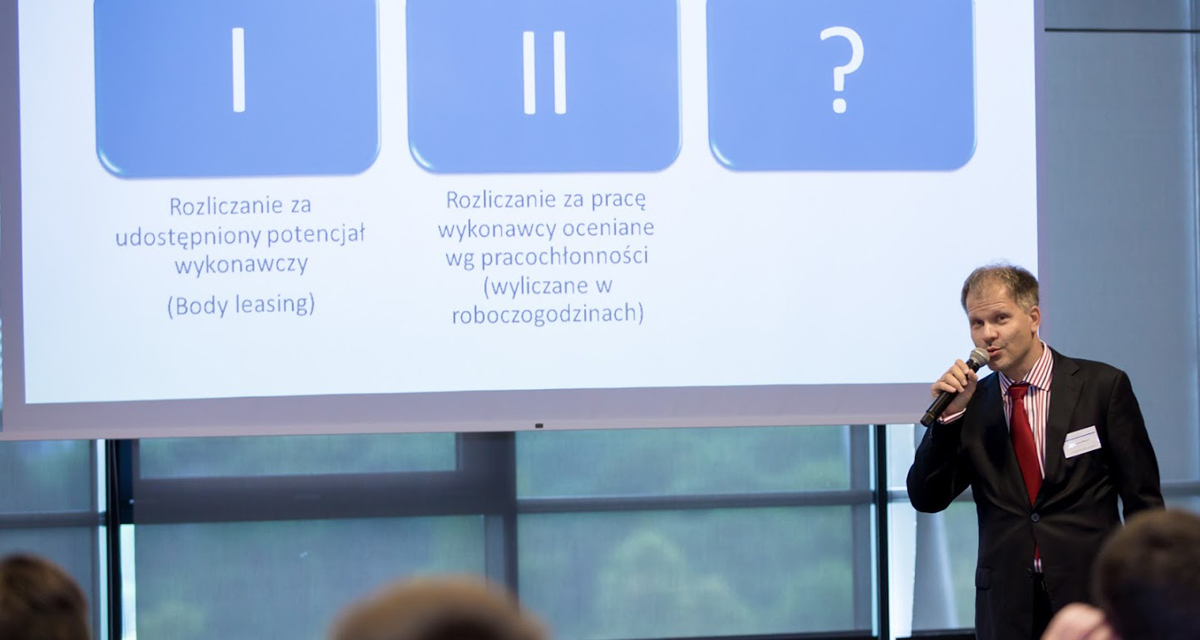
During the meeting, the participants were able to find out how to prepare an order based on function points measures and which tools and methods to use to measure software, among others. In addition, Jarosław Świerczek talked about abnormalities in the function points sizing - he explained their causes, consequences and ways of preventing them. In turn, Arkadiusz Wójcik explained how the cost of running IT projects could be optimized thanks to the use of functional measures.
The function points method enables setting clear terms for order execution. It minimizes the risk associated with delays and incurring additional costs resulting from them, said Arkadiusz Wójcik. In my opinion, all public administration units should use the function points method while changing or developing software. This is the most favorable model, he added.
The event, whose patron was The Ministry of Digital Affairs, was organized by the Polish Association for Software Measurement.

The goal of the cooperation between GUGiK and Asseco is to develop a central access point to spatial data of the State Geodetic and Cartographic Resources (PZGiK) and other units of the state administration. GUGiK is also willing to implement intuitive solutions facilitating the analysis based on 3D data and increasing the scope of their use, among others.Under the agreement, Asseco will develop the Center for Spatial Analysis of Public Administration (CAPAP), which will create a common competence and analytical environment that will provide citizens, businesses, and public administration units with advanced services based on spatial information, derived from georeferential registers. These services are crucial for conducting business, sustainable development, environmental protection and management, among others. In addition, within the framework of the ZSIN - Phase II project, the company will develop an integrated real estate information system. This will improve record-keeping and increase the level of service for citizens and businesses in the field of capturing information. The project will streamline many processes implemented by both the public administration and selected entities which use such data. Asseco will also develop the K-GESUT project in order to increase the potential of the use of utilities network data by the public administration, businesses and citizens. The system will be also connected with the CAPAP system in order to improve investment planning.
Asseco has been supporting the development of e-services by the Polish administration for years. Our IT solutions will significantly improve GUGiK's operations. It is worth adding that this is another project implemented by Asseco for the Office. We have already developed a national database of geodetic records of utilities network, and implemented, in cooperation with Esri Polska, the INSPIRE services, said Przemysław Borzestowski, Vice President of the Management Board of Asseco Poland.
Under the agreement, the company will also modify the tools within the Geoportal systems, the National Topographical Database Management System (KSZBDOT) and the Numerical Terrain Model Management System (SZNMT). The contract is to be implemented by the end of August 2018.

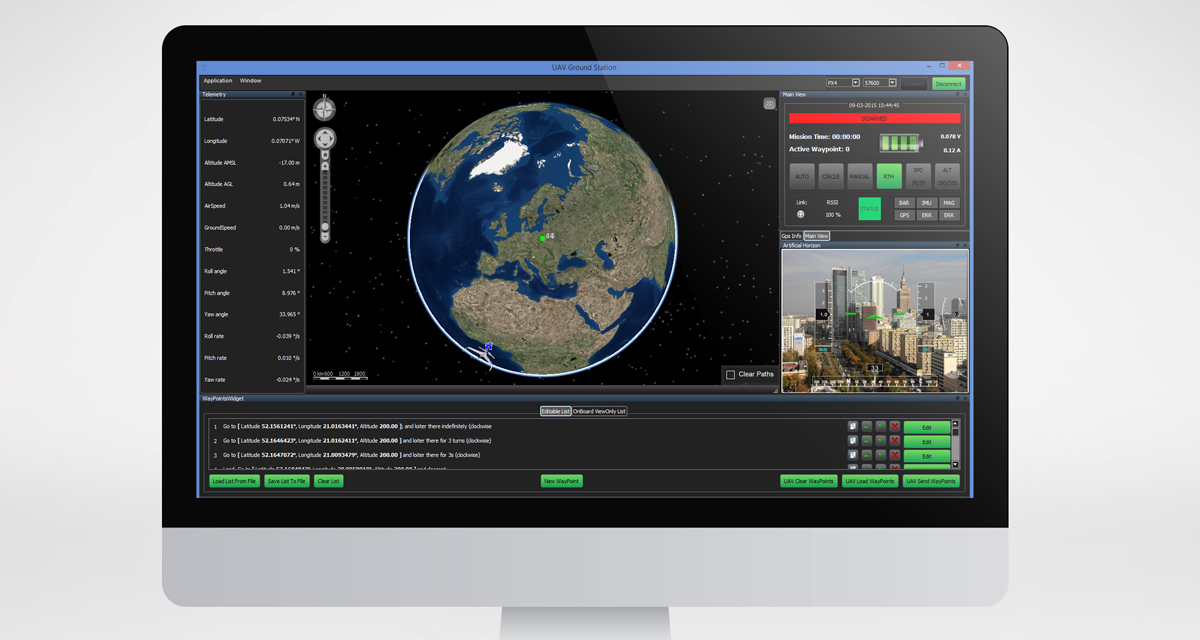
The Polish solution will be the important element of the Geographical Information System (eGIS), currently under implementation in the Lagos State. The System will capture photogrammetric data from the vast urban agglomeration area which then will be post-processed and made available through the geoportal. It will enable, among others, a more effective planning of the regional development and management of land administration resources as well as monitoring of environmental pollution. The portal will also provide an easy access to information for the general public and investors.
A dynamic expansion in the African market has made the unmanned systems increasingly popular in a number of security or business applications, says Zdzisław Wiater, Deputy Director of the Public Administration Division in Asseco Poland. It is the first time that the government of Lagos State has decided to use the unmanned systems in its eGIS project. Their decision to cooperate with us is of vital importance as the development of these systems represents a key element of Asseco's strategy. We offer the ground control software that can be integrated with unmanned platforms from any third party manufacturer. I think that it is this flexibility to build various systems composed of Asseco GCS software, UAV platform of choice and image recorder, that has been decisive for our success in Nigeria, he added.
Under the project, Asseco will provide: two control stations - Asseco GCS with software; Asseco USE (Universal Simulation Environment) flight simulation system and two unmanned platforms (Tiguar), which will be built by uAvionics - a company Asseco has been cooperating with. Asseco will also take care of integrating the whole solution. In addition, it will be responsible for training of operators and maintenance personnel as well as system testing.
We have won against our competitors thanks to advanced functionalities of our solution, which ensure maximum safety during flights over densely populated areas, among other factors, says Zdzisław Wiater. Also, the support from Asseco Nigeria, which will be responsible for system maintenance, has been very important. This project has once again demonstrated the great potential of the Asseco Group, he added.
……………………………………………………………………………………………………………………………………………………………………..
Asseco Poland is the largest Polish IT company listed on the WSE and the 6th largest software developer in Europe. It has been providing companies and institutions with advanced products and services for over 25 years. It leads international Asseco Group, which operates in 54 countries and employs 22,000 people. Asseco is a recognized provider of solutions for Polish uniformed services and has been increasingly active in the defense sector. The Company has gained its experience in carrying out projects for various clients, including the Ministry of the National Defense, NATO (eg. NATO Compiter Incident Response Capability) and Frontex. It uses the experience gained in projects implemented for international institutions in tenders resulting from the program of modernization of the Armed Forces of the Republic of Poland, such as: command system, image analysis system, micro and mini unmanned systems and information security systems.
uas.asseco.com
asseco.pl
asseco.com

According to the authors of the publication, the cyber security products and services sector may become a strong pillar of the Polish economy and, similarly to other countries, increase the security of the state and the industry. According to the data quoted in the publication, the value of the global cyber security sector has reached USD 120 billion, and it is estimated that it will double by 2022. Polish cyber security products and services based on innovative solutions can prove to be the country’s competitive export goods.
Poland has the potential to develop a strong cyber security sector. The nature of the Polish economy enables the development of a national specialization in that field. However, this requires a coordinated and well-thought commitment of the state, stresses Dominik Skokowski, expert of the Kosciuszko Institute and the editor of the report.
According to the authors of the study, who have analyzed the development of the cyber security sector in Great Britain, Israel and Singapore, it is essential to keep the state actively involved in both the civil and military areas. The support of the public administration is needed at every stage, starting from the development and implementation of the national strategy, through the development of appropriate coordinating mechanisms, and ending up with designing an R&D program, the authors of the report state. Also, it is worth using the opportunities stemming from Poland's membership in such organizations as the European Union (EU) and NATO.A close public-private cooperation in the area of cyber security will also play a key role, as it should support the development of innovative solutions. Thanks to the use of the knowledge and know-how of the private sector, we are capable of developing a prosperous market and successfully compete against global leaders. Several countries, which are currently recognized as the global leaders in the area of cyber security, have already followed that path, including Israel, whose revenues generated by the cyber security sector reached USD 3.75 billion in 2015, which accounted for over 1% of the country’s GDP. Great Britain is another example - the value of its exported cyber security products is estimated at about USD 2 billion.In the case of Poland, the state should provide domestic companies with friendly institutional and legal environment. The administration should create conditions enabling Polish companies, including start ups, to increase their competitiveness and support their foreign expansion. In addition, Poland should also develop a strategy for long-term image-building activities which would promote domestic companies and the Polish know-how.
It is currently hard to imagine a development of a modern, globally respected country without the participation of domestic IT companies. This is connected with cyber security and the concept of cyber sovereignty, but also with an economic pragmatism. A business success of domestic companies is not only a benefit for their owners and employees, but also for all citizens. In addition, these companies make a significant contribution to the state budget, says Zdzisław Wiater, Director of the Military Division in Asseco Poland. Currently, Poland can use the enormous potential of domestic IT companies, which have gained experience over the last 25 years, to build a strong position of our economy and increase the security of our country and its key sectors, he adds.
The goal of the report of the Kosciuszko Institute “Security through Innovation. The Cyber Security Sector as a Driver of Economic Growth” is to identify the most important steps which have to be taken to develop a strong national cyber security sector based on innovative products and services. The publication includes an expanded analysis of key aspects of public-private partnerships, the development of the ICT and cyber innovation market, the role of the military sector, and the case study of the states which are leaders in the cyber security area. Asseco Poland is a partner of the report.More information about the report: http://www.ik.org.pl/en/cyber-economy-report/
The full report is available here: http://www.ik.org.pl/wp-content/themes/ik/report-img/security-through-innovation.pdf
The Kosciuszko Institute is a non-governmental, non-profit research and development center established in 2000. The mission of the think tank is to contribute to the socio-economic development and security of Poland as an active member of the European Union (EU) and NATO. The institute specializes in developing strategic recommendations and directions for key public policies which provide substantive support to Polish and European policy makers. The reports and analyzes prepared by the think tank's experts are independent and apolitical. Their conclusions are an important source of information for the private sector and civil society.
A package of the most important press materials: multimedia, documents and data about Asseco ready to use.


This website uses cookies and other tracking technologies to assist with navigation and feedback, analyze the use of our products and services, support our promotional and marketing efforts, and provide content from third parties. View more cookie settings to manage your preferences.
More information about cookies and data storage can be found in our Privacy Policy.