.jpg)
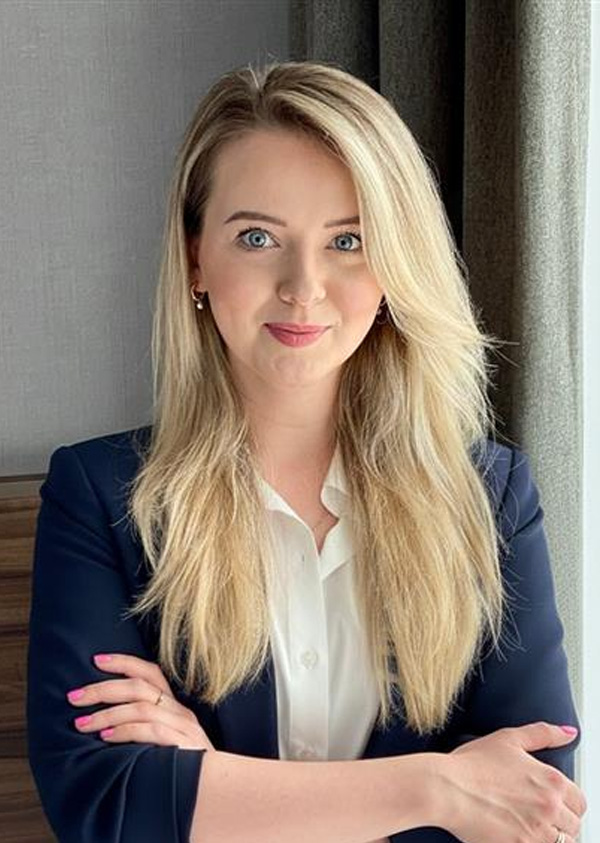
It is the country holding the second place in terms of economic growth - said Tomasz Bendlewski on the Polish Radio. I am convinced that African countries are a future, that this place has tremendous growth potential. European and Polish companies should invest in that future - he added.Tomasz Bendlewski's commentary in Panorama and on the Polish Radio

The project, developed by the Energy and Gas Engineering Division and the EU Project Office, concerns research into the power control of electricity consuming devices using the Internet-of-Things technology and the development of methods to influence the power consumption of electricity consumers.The main feature of the Asseco Demand Side Management system will be the ability to regulate the demand for electricity not by switching off the equipment of electricity consumers, but by "taking over" the control over them and by flexibly reducing their power usage.This will increase the safety of the electrical power equipment system and will prevent the occurrence of voltage drop in the distribution network during periods of increased electricity demand, for example due to prolonged heat.The total value of the project will amount to PLN 6,671,821.86.
.jpg)
The Asseco Group ended 2016 with the highest sales in its history and record-breaking operating profit. The Group's revenues amounted to over PLN 7.9 billion, which represents a 9% increase on annual basis. Operating profit increased by 3% to PLN 769 million. These positive results helped Asseco to hold 37th position in the 500 List. The announcement of the results took place during a gala at the Museum of the History of the Polish Jews Polin, during which the Rzeczpospolita's Eagles were awarded.
This is a great honor for us, said Adam Góral, CEO of Asseco Poland, after receiving the statuette. We are the largest Polish start-up because 27 years ago, three people in Rzeszów established Asseco, and since then we have showed together that it is possible to achieve success no matter of a location of a business. If we have dreams, if we believe in what we do, we can succeed and that is why Asseco is currently present in 55 countries, he added.
Apart from Asseco, which received the main award, the nominees for Rzeczpospolita's Eagle in the category of the best new economy company, included: CD Projekt, Netia, Oponeo and T-Mobile Polska.Asseco has been the winner of this award for the third time. In 2013, the company won the Eagle in the 15th edition of the 500 List. In turn, in 2009, it received the Eagle of Rzeczpospolita in the category of services and infrastructure companies.Asseco Poland is Poland's largest IT company. The group employs 22,000 people and operates in over 50 countries. The company's record-breaking results are a consequence of diversification of revenue sources as well as the Asseco Group's business model, among others.
.jpg)
The Asseco’s expert spoke with other participants of the debate, including Andrzej Piotrowski, Undersecretary of State in the Ministry of Energy and Mieczysław Wrocławski, Director of the Innovation Department at Energa Operator, about smart grids, advanced analytics and correlations of data from IT systems, industrial control and external systems, among others.
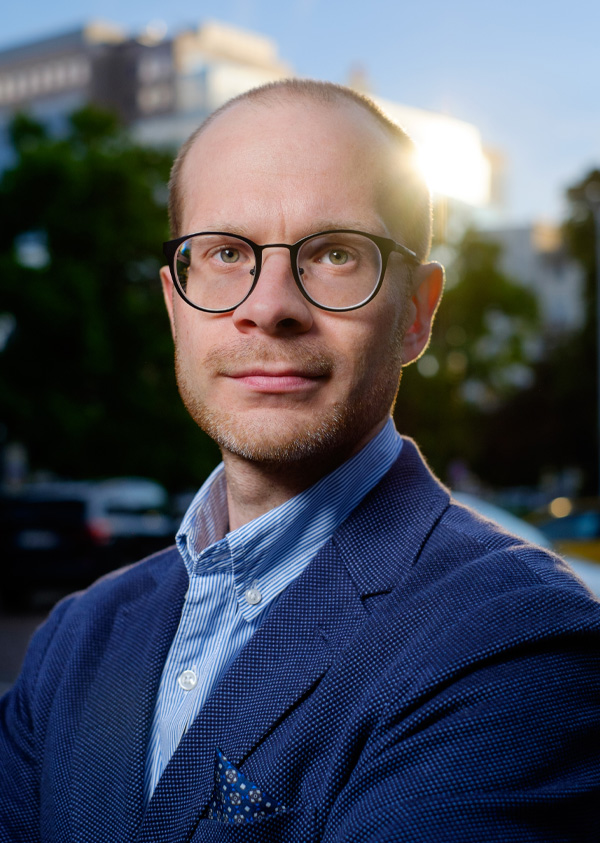
We constantly improve our products in line with global trends and changes in the markets, said Tomasz Bendlewski. We want our customers to have access to the latest solutions associated with such trends as the Internet of Things, consumerization and dual-speed architecture, he added.
The Asseco’s representative also presented the award in the category of Merchant of the Year to Tauron Polska Energia. Asseco has implemented one of the largest billing systems in Europe in Grupa Tauron.EuroPower is a platform for dialogue and, above all, the place for public consultation between the government representatives and the representatives of the industry and co-operating sectors. Asseco has been present at the conference for the third year in a row.

Asseco's representatives, together with Head of the Information Systems Inspectorate at the Ministry of Defence, Colonel Paweł Dziuba and Legal Adviser at the NATO Joint Force Training Center in Bydgoszcz, Commander Wiesław Goździewicz discussed the measures taken by the Polish Ministry of Defence following the last year's NATO summit as well as the public-private cooperation in the area of cybersecurity in the situation of a threat to the country.It is clear that the Ministry of Defence has been carrying out the tasks that were designated to it at the NATO summit in Warsaw - said Zdzisław Wiater. There is no safe state without a modern army, but also without safe sectors or well-protected and stable large IT systems used by the state administration - he added.The meeting also addressed the challenges for the cybersecurity of the Polish industry, data protection in the digital society and Polish cybersecurity innovations.The mission of CYBERSEC PL is to build national capabilities to strengthen Poland's cybersecurity system. The purpose of the event is to create solutions that support effective and sovereign strategy in the field of cyberspace and the development of the Polish economy. The conference is co-organized with the Kościuszko Institute.

The speakers and panelists included, among others, President of the Management Board of KZBS Krystyna Majerczyk-Żabówka, Vice President of the Management Board of KZBS Michał Krakowiak, Vice President of the Management Board of Asseco Poland Zbigniew Pomianek and CEO of G Rock (Gibraltar) Sławomir Lachowski.Efficient decision-making processes in cooperative banks may face a test due to a digital competition. The use of consumer preference analysis can be a competitive advantage in dealing with other players in the market. Even more profound knowledge of the customers' needs and their lifestyle will be a basis of business strategies in the era of new technologies and increased competition. Therefore, it will be a key factor for further development of attractive and competitive offers for customers - said President of the Management Board of KZBS Krystyna Majerczyk-Żabówka.There are innovations which change the reality entirely. We currently experience them in the banking sector - said CEO of G Rock (Gibraltar) and the founder of the first mobile bank in Poland Sławomir Lachowski. Today, in order to meet customers' needs, the ability to use new technologies is essential. That can be achieved both by fintechs and existing banks - he added.An important point of the meeting was a debate led by Eugeniusz Twaróg from Puls Biznesu on the Internet era in the banking sector and its impact on the customer service directly in the branches.Co-operative banks have an interesting and valuable advantage because they can offer banking services at a certain place and time. However, in the face of current challenges, it is not a sufficient advantage. Therefore, it is worth to verify the current model of action and make an effort to maintain a cooperative identity while using the scale effect to achieve the goals expected by the clients in a faster, more efficient and effective way. The bank of the 21st century is a friendly, intuitive and cheaper bank - one that responds to customers' needs - said Vice President of the Management Board of KZBS Michał Krakowiak. Up until recently, internet marketing has been a distinguishing feature in the market. In a moment, such a distinction for cooperative banks may be a branch, especially in the areas where large banks are not present - said Vice President of the Management Board of Asseco Poland Zbigniew Pomianek. The banks can be supported by IT vendors that monitor market trends closely and offer cutting-edge solutions such as the Asseco Advisory Banking Platform (ABP) - a powerful tool for bankers to help them with staying connected with customers and boosting their sales effectiveness.Marcin Kwilosz from Asseco, in his presentation, mentioned the fact that the omnichannel banking was a strategy to help banks with responding to the challenges of the modern banking market and the needs of customers. He emphasized that it was a strategy which needed to be a backbone of a modern banking, which involved designing customer service processes in order to make them uniform regardless of the communication channel they were in. In turn, Krzysztof Korus, a partner at dLK Korus, Okoń Radcowie Prawni sp.p., presented the challenges and their implications for cooperative banks related to the obligation of the implementation of the PSD2 Directive - a new EU directive regarding the payments in the EU internal market. Cooperative banks will have to adapt their IT systems to the requirements of the new EU rules.The conference participants also had an opportunity to see the latest developments in the IT solutions for the banking sector. The latest "top & hot" rank was presented by Tomasz Leś from Asseco, who mentioned, among others, tools for biometric identity authentication and the onboarding process, as well as platforms for cooperation between banks and fintechs. These platforms are being designed due to the implementation of the PSD2 Directive.
A package of the most important press materials: multimedia, documents and data about Asseco ready to use.


This website uses cookies and other tracking technologies to assist with navigation and feedback, analyze the use of our products and services, support our promotional and marketing efforts, and provide content from third parties. View more cookie settings to manage your preferences.
More information about cookies and data storage can be found in our Privacy Policy.