After three quarters of this year, the non-IFRS operating profit exceeded PLN 1 billion and was 17% higher. In turn, non-IFRS net profit, after an increase of 12%, amounted to PLN 303 million.
Thanks to a consistently implemented development strategy, the Group improved its results in all operating segments. In the Formula Systems segment, after three quarters of 2020, sales increased by 14% to 5.5 billion PLN and operating profit by 28% to PLN 446 million. The sales of the Asseco International segment increased by 9% to PLN 2.2 billion and operating profit went up by 6% to PLN 252 million. The Asseco Poland segment generated revenues of PLN 1.0 billion, which is 12% more than in the same period last year, while operating profit was 23% higher and amounted to PLN 155 million. Foreign markets represented by the Formula Systems and Asseco International segments were jointly responsible for 88% of the Group's revenues.
Asseco's revenues are very well diversified by sectors. After three quarters of 2020, the general business sector accounted for 38% of total revenues, banking and finance – for 37% and public institutions – for 25%.
In the third quarter of 2020 alone, the Group recorded sales revenues of PLN 2.9 billion, which marks a 7% increase. Operating profit went up by 15% and amounted to PLN 299 million, while the net profit attributable to shareholders of the parent company amounted to PLN 91 million, i.e. 16% more than in Q3 2019.
Asseco's consolidated order backlog for 2020 is currently worth PLN 11.3 billion and is 12% higher than in the corresponding period last year.
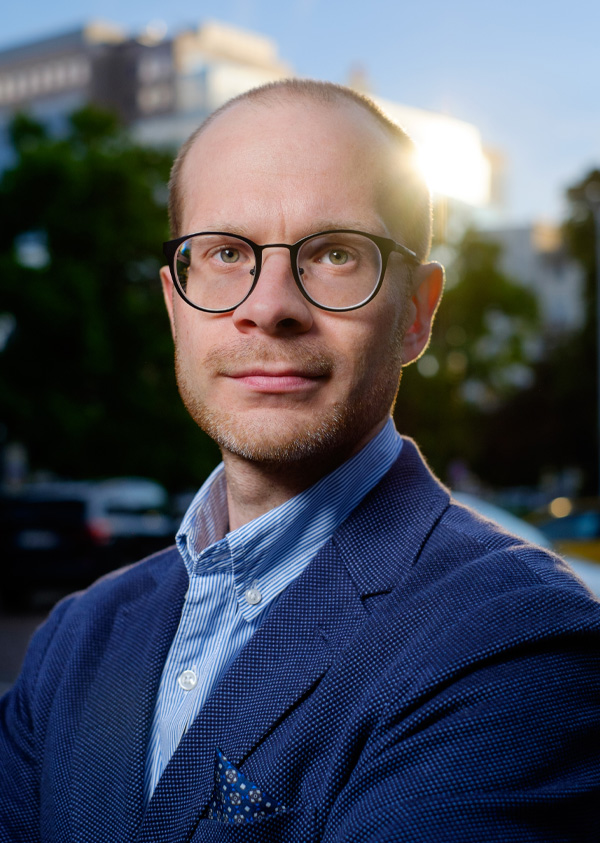
We closed the first three quarters of 2020 with double-digit revenue and profit increases, which we consider to be a great success in times of high uncertainty associated with the pandemic worldwide. We consistently pursue a strategy of strong diversification of our business. We are developing both organically and through acquisitions. During the first 9 months of 2020, several new companies joined our Group, which will strengthen our position on international markets. The acceleration of digitization processes in companies results in increased demand for solutions in selected IT areas, which allows us to sign new contracts and build a solid backlog for the current year and subsequent quarters. However, we approach the future with moderate optimism. Due to uncertainty related to the general economic situation, we can observe caution of our business partners in undertaking new investment projects. However, I hope that we will come away unscathed from this difficult time, said Rafał Kozłowski, Vice President of the Management Board of Asseco Poland.
Non-IFRS figures include adjustments for the cost of amortization of intangible assets recognized under the combination settlement (PPA), the costs of share-based payment transactions with employees (SBP), the costs and financial revenues resulting from the transactions of purchase and sales of companies (M&A) and tax effects associated with them.


Asseco was ranked 1st in the list of "The most dynamic exporters on the Warsaw Stock Exchange". Last year, the company generated PLN 10.7 billion in revenues, 89% of which was foreign sales, having increased by 19% compared to 2018. Foreign sales of nearly PLN 9.5 billion also earned Asseco 3rd place in the "Largest exporters on the WSE" ranking. The lists were prepared by the editors of the "Parkiet" daily.

Asseco's system enabling the client to place the biometric signature on documents has been implemented at KRUK on field advisors’ tablets. Owing to this, when signing the agreement, there is no need to spend time printing two copies of the agreement and sending signed documents by mail or courier to the company. Currently, the electronically signed document is available immediately after the client has signed it in KRUK's electronic systems. In turn, the client can receive their copy of the agreement by e-mail during the visit or in paper form. What is important, then one copy of the document is printed for the client. The biometric signature offers many security options, which makes it much more secure than a handwritten one. A handwriting forensic expert is able to evaluate more personal and behavioral characteristics of the person submitting the biometric signature and indicate its ownership.
Digitization is the future of our sector and we are open to innovative solutions. By using biometrics and mobile devices, our field advisors will be able to serve our customers fully electronically. This is especially important at this time. The implementation of the biometric signature will certainly make the work of our training advisors easier - not only will it optimize the time of customer service, but it will also be secure for the customer. Another advantage of the solution is the care for the environment, because thanks to digitization we can reduce paper consumption - said Tomasz Ignaczak, General Director at KRUK S.A.
One of the key stages of the debt service process is signing the agreement between the parties. In the implemented solution, the handwritten signature on the paper agreement has been replaced with a handwritten signature recorded electronically (biometric) by the Signatus software, the application by the Slovak company Anasoft – Asseco’s partner. The biometric signature data is additionally secured by Asseco with the qualified electronic seal and the qualified electronic time stamp.
This is another digitization project we have been carrying out for KRUK S.A. over the last several months. We are very pleased with it and it shows that the process of shifting away from paper documents is an important transformational element of many organizations. However, it is worth noting that while introducing digital processes, we can also take care of our common security, especially in times of the pandemic, using selected mobile devices with Samsung Galaxy Tab Active2 scribers, which can be safely disinfected - said Artur Miękina, Project Sales Director at Asseco Data Systems.
The implemented solution is an answer to the growing need to streamline and shorten the time of servicing processes related to debt service.

The Asseco's initiative will consist in conducting activities aimed at reducing paper consumption and promoting and supporting digital services development. The company will help clients design and implement solutions that enable conversion of traditional processes to digital where possible.
Additionally, the company has declared that its employees will try to act according to the following principle: "
" initiative already implemented by Asseco employees.
For many years we have been providing IT solutions that not only make life easier for customers or citizens using digital services, but also make the digital world more efficient and secure - says Artur Wiza, Vice President of the Management Board of Asseco Poland. The awareness of pro-environmental activities is growing and many companies and individuals are involved in such initiatives. We want to support them in a natural way for us - through digitization. We are aware that the digital transformation requires bold decisions and many changes, including changes in strategy, processes and selection of appropriate tools. This is a big challenge for us and our clients, but we are ready to take it up and be a role model for others. Conducting pro-environmental activities together with the Polsat Group and including our initiative in the Clean Poland Program will allow us to increase the scale of the undertaking and reach more people with educational activities, he adds.
The Clean Poland Program, implemented by the Polsat Group, is an initiative which aims to educate the society and show the benefits of an ecological lifestyle. Not everyone is aware of how much human activities and the way we function every day affect the environment, and consequently people's health and life. The authors of the initiative emphasize that pro-ecological attitudes should not remain only in the sphere of declarations, especially since in many cases they are very simple to implement and at the same time definitely cheaper than traditional solutions.
The Asseco #BusinessWithoutPaper initiative has already started. Since March, the company has increased the share of electronic invoices in settlements with contractors to over 90 percent and reduced paper consumption in printers by almost 60 percent.
#BusinessWithoutPaper #PaperlessBusiness #CleanPoland #StartFromYourself #PolishDigital Valley

The dynamic development of Santander Consumer Bank – a credit-focused Bank, a constantly growing sales network, the desire to meet the needs of employees and customers, as well as to shift away from the time-consuming “paper” circulation of documents were the reasons why the decision to introduce modern trust services was made. The aim of the project was to create a process of signing a consumer credit agreement in accordance with the “paperless” idea, the EU eIDAS regulations and the highest standards of user experience.
, Deputy Director of Technology and Operations Division, Santander Consumer Bank.
The system designed and implemented by Asseco together with the bank, thanks to the digitization of credit documentation confirmation, has shortened the time of customer service, enabling remote conclusion of agreements and their acceptance by means of advanced one-time signatures with authorized SMS codes. The project also included a qualified electronic seal and qualified validation service. The introduction of paperless processes allowed to relieve the backoffice and reduce the space occupied by paper agreements.
The implementation of the electronic sales process has shortened the time of concluding a credit agreement by 30%*. It has also contributed to the improvement of the quality of work of advisors in the bank’s partner network, of which about 80%* pointed to the ease of handling the new process, and 40%* appreciated the possibility of concluding a credit agreement without using a single sheet of paper.

Asseco won in the "Best Innovator - Large and Mid-sized Companies" category in the "Good Company" competition, organized by the Association of Entrepreneurs and Employers. Statuettes were awarded to the most innovative and fastest-growing companies in the Podkarpacie region. Asseco was recognized, among other things, for its financial performance and development potential. The company was also recognized for being a stable and employee-friendly workplace.
Asseco is the largest IT company in Poland and the Central and Eastern European region. For almost 30 years it has been developing technologically advanced software for companies in key sectors of the economy. It is present in nearly 60 countries around the world and employs about 27,000 people. The patrons of the "Good Company" Program are the Polish Development Fund (PFR), the Polish Agency for Enterprise Development (PARP) and the Industrial Development Agency (ARP).
A package of the most important press materials: multimedia, documents and data about Asseco ready to use.


This website uses cookies and other tracking technologies to assist with navigation and feedback, analyze the use of our products and services, support our promotional and marketing efforts, and provide content from third parties. View more cookie settings to manage your preferences.
More information about cookies and data storage can be found in our Privacy Policy.