Asseco's communication with the market is top-notch, which was once again recognized in the survey of investor relations of WIG30 companies, which was organized by the "Parkiet" daily and the Chamber of Brokerage Houses (IDM). Asseco once again ranked 3rd in the part of the survey conducted among institutional investors and 4th in the one aimed at individual investors.
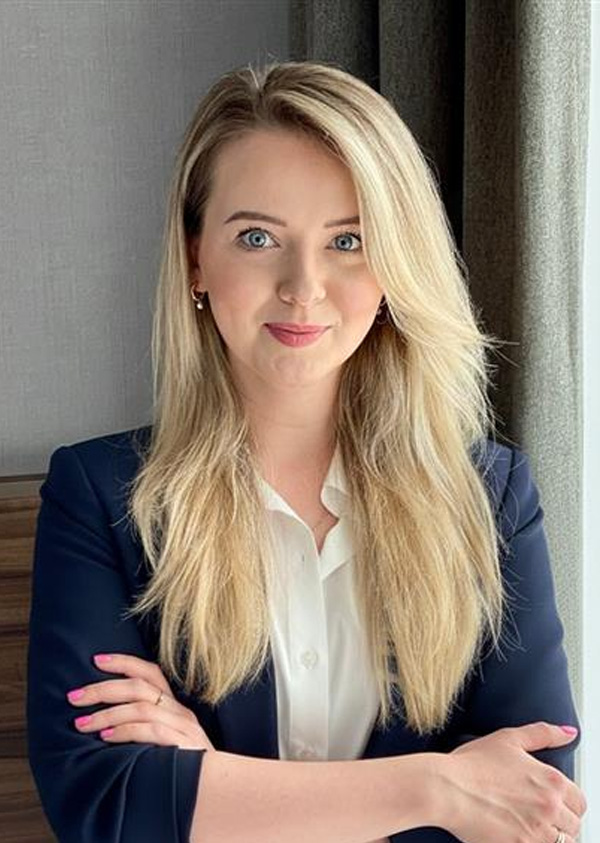
Good investor relations are based on teamwork. Of course, we have a separate IR department within the structures of Asseco, but in fact the team responsible for investor communication in the organization is made up of people from the reporting, controlling, marketing, PR, M&A, management office, legal office, compliance and process management department, as well as business divisions or subsidiaries. Of course, the support of the Management Board and its openness to contact with market representatives is invaluable. An IR officer alone can do little without the cooperation and involvement of others in the organization. The key to success is knowledge sharing and efficient and regular communication," said Joanna Paczkowska-Tatomir, Head of Investor Relations at Asseco Poland. In addition, conducting an effective IR policy is based on diversification and proper adjustment of communication channels and tools. At the time of the pandemic, we all functioned exclusively in the online formula. Today we operate in a hybrid model - we carry out part of our activities online, while we are very keen to participate in events that allow us to have direct contact with investors," she added.
Asseco is committed to transparency and equal access to information for all investors. As part of its regular IR activities, it organizes conferences every quarter in a hybrid mode (onsite and online). This event is available to any investor. During the conferences, the Management Board discusses the financial results of the reporting period, presents the outlook for the near future and answers questions from participants. Recordings of these events with transcripts, as well as investor materials such as presentations, fact sheets and financial data in Excel format, are published on Asseco's investor relations website. Since 2011, the company has made recordings of its General Meetings available on its website, and since 2020 it has allowed shareholders to participate in the meetings in an online format. It also maintains active communication via social media. In turn, investors can contact Asseco by emailing, calling or using platforms such as MS Teams or Zoom.
The presentation of awards to the companies rated highest in the investor relations survey took place during the Conference of the Chamber of Brokerage Houses (IDM). The winners, as every year, were selected in two parts of the survey: through votes of readers and individual investors, cast on the Parkiet daily's website, and through a questionnaire sent to financial institutions.

Poland has made great progess in the digitization of healthcare, with e-leaves and e-prescriptions being prime examples. However, there are many areas that still require joint work by legislators, medical institutions and technology partners. Krzysztof Groyecki, Vice President of the Management Board of Asseco Poland, responsible for the area of solutions for the healthcare sector, points out the most important trends and challenges in digitization.

The annual survey of investor relations of companies in the WIG30 index has been launched - this is the ninth edition organized by "Parkiet" and the Chamber of Brokerage Houses (IDM).
The companies with the best communication with the market will be selected in two parts of the survey by:
The awards for the best IR will be presented on March 2 at this year's conference of the Chamber of Brokerage Houses.
In the last year's ranking, Asseco was listed 3rd in the section conducted among institutional investors and analysts, and 4th in the section dedicated to individual investors.
Related links:

The number of cyber attacks increased by an average of 25% year-on-year, according to data from ComCERT of the Asseco Group. Security investment was on average one-third higher in most organizations. Experts emphasize that the situation in the previous year was affected by the war in Ukraine. As many as 85% of attacks came from outside, while 15% were internal threats. More than half of the attacks were undertaken by organized crime groups. Phishing and DDoS were the most common threats in 2022, together accounting for more than 80% of all cyber incidents.
ComCERT experts from the Asseco Group predict that the new year will be equally challenging at best. The war in Ukraine or the development of attackers’ competence and technology are just a few of the challenges that security specialists will have to face. They will be supported in the fight against threats by Artificial Intelligence (AI), which, however, is also being used successfully by cybercriminals. In response to the growing number of attacks, EU authorities are working on a regulation concerning the digital resilience of critical infrastructure.
The most important trends in the area of cyber security according to experts from ComCERT of the Asseco Group.
In the new year, the fight against cyber threats will be extremely difficult. According to Krzysztof Dyki, president of ComCERT of the Asseco Group, there will be more attempted attacks, which has to do with the economic slowdown (investment restrictions causing greater risks) and the war in Ukraine. The expert emphasises that since the beginning of the outbreak of the armed conflict, cybercriminals have particularly often taken government institutions and critical infrastructure as targets, but they have not spared business either. The CISO (Chief Information Security Officer) and other security leaders should include in their plans, also financial ones, resources for threat intelligence activities to prevent current threats.
The collapse of the FTX exchange in November affected the entire cryptocurrency market. Many investors came under pressure due to the uncertainty of what happened to their money. Cybercriminals carrying out fraudulent cryptocurrency transactions see their opportunity in the biggest crisis in more than a decade. Krzysztof Dyki of the Asseco Group predicts an increase in their activity in the coming year. In addition, accelerating inflation and rising interest rates, as well as the economic slowdown, will contribute to more cryptocurrency fraud. This is because in such conditions more people are looking for favorable financial offers and often lose vigilance.
Not only the cryptocurrency market, but the entire financial industry is an attractive target for cybercriminals. Not surprisingly, the EU authorities are working on regulations to strengthen the security of organizations such as banks, insurance companies and investment funds. The Digital Operational Resilience Act (DORA) will introduce uniform requirements for the cyber security of networks and information systems of organizations operating in the financial sector. The changes will also extend to third parties providing IT-related services to them, such as cloud and business analytics. The member states will have to implement a national strategy to increase the resilience of critical entities, and will have to conduct a risk assessment at least once every four years. If the regulation is completed as early as 2023, covered entities will have to comply with the new requirements. Depending on the current state of cyber security systems, potential investments could significantly absorb both the IT team's time and put a strain on the organization's budget.
Artificial Intelligence and Machine Learning have made a significant contribution to increasing the level of cyber security. These technologies play an important role in building systems responsible for detecting threats. The use of AI in the process of analyzing the security of code and software behavior allows to automate many activities and see how the operation of a particular application affects the entire organization. Unfortunately, Artificial Intelligence is also an effective weapon in the hands of cybercriminals. They use fictitious entities to purchase solutions based on it, or hack into the systems of legitimate organizations. They then take control of AI solutions and use them to test the capabilities of the malware they plan to exploit.

Meet with experts and learn how to safely make a digital transformation
How can technology be used to address today's economic challenges, including rising energy prices, disrupted supply chains and a shortage of skilled workers? How does technology enhance transaction security in the digital economy? Listen to speakers, debates and the latest case studies and learn how to effectively optimize and automate business processes in your organization. On May 23, 2023, we will meet you in Warsaw and online at the Trusted Economy Forum, one of Europe's largest conferences on the digital economy. The event will be held under the slogan "On the edge - the new reality in the digital world". Save the date now to meet the global digital market experts!
Trust in a digital world
Today it is hard to imagine doing business without digital tools. We use electronic signatures and seals as well as cloud-based document management platforms increasingly more frequently. They strengthen the level of trust in business processes, allowing us to cooperate online with contractors, serve customers from all over the world or manage a distributed team remotely.
At a time when technology so powerfully changes business models and shapes everyday life, the greatest value remains trust, both between participants in the economic ecosystem and in the technology itself – one that is uniform, secure and universal, said Ewelina Chudy, Head of the Organizing Office of the Trusted Economy Forum. With the key role of trust in the digital economy in mind, Asseco is inviting you to discuss #TrustedEconomy. Our experts will also present the practical side of digital transformation and examples of companies and institutions that have successfully implemented these solutions, she added.
Customers choose online solutions
Without trust, there would be no success of e-commerce, e-banking and many other industries where digitization has eliminated the need for a physical presence. In the financial sector, for example, the number of mobile banking users grew from 15 million to 18 million in one year, and in online banking that figure increased from 20 million to 21.7 million. Physical or geographic boundaries no longer matter - what is key is the availability of online services anytime, on any device and for any group of users.
On the brink of challenges and threats
The greater the share of digitization in customer, business and government relations, the more the importance of cyber security to guarantee trust with the other side of the transaction increases. The challenge of today's business is to skillfully navigate the edges of the challenges and risks, as well as the opportunities and benefits of the economy’s digitization. The role of technology partners providing proven digital services is to ensure that trust backed by cyber-security remains a driver of the digital economy.
About the conference
The idea of the Trusted Economy Forum is to integrate the technological, business, legal, administrative and academic communities, with the aim of building digital societies, not only at the national level, but also globally. The conference is a space for discussion, exchange of views and experiences. Last year's edition was attended by more than 40 experts, and nearly 630 people registered for the event.
Learn more at: https://trustedeconomyforum.com/pl/ and save your date on May 23

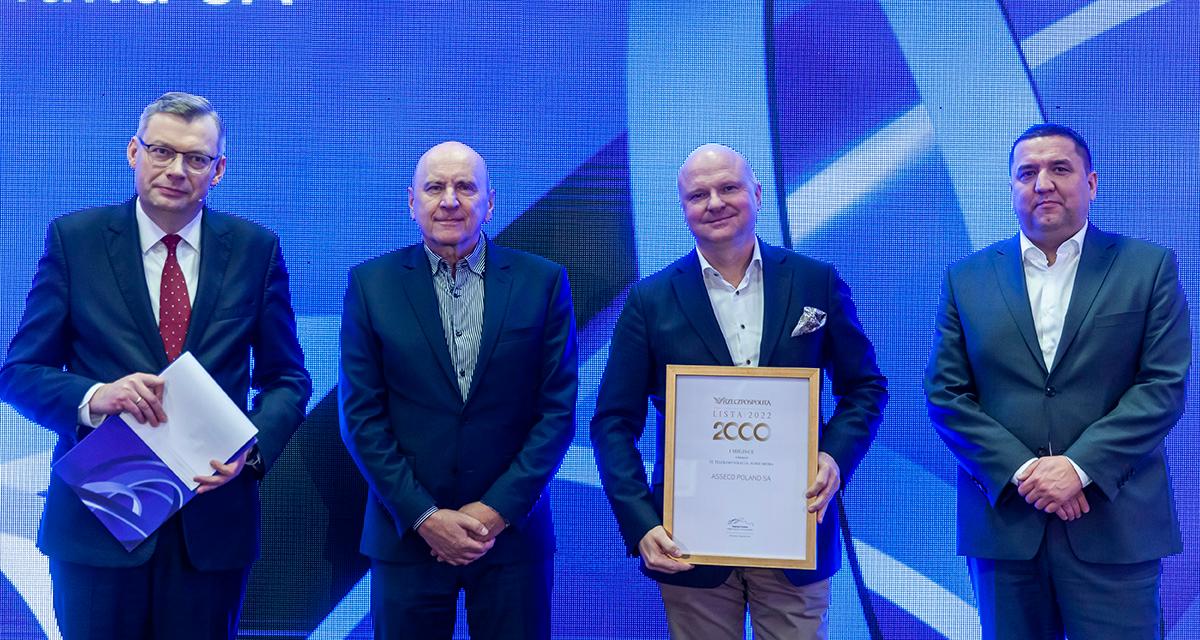
Asseco is once again the highest ranked company in the "IT, telecommunications, new media" category in the "List of 2000" ranking prepared by the editors of the "Rzeczpospolita" daily. The list is compiled on the basis of companies' results. Asseco's sales in 2021 reached a record PLN 14.5 billion.
Last year, sales of Asseco's proprietary products and services totaled PLN 11.3 billion, and consolidated operating profit reached PLN 1.5 billion.
Since we started as a small technology company, which today we would call a startup, we have steadily focused on what matters most to us - software for most sectors of the economy. A clear vision of development, strategy and consistency in action have made the Polish company extremely successful around the world, and in such an innovative field as IT. We would like to thank the customers who trusted us at the beginning and have been with us ever since, and all those who have joined us in more than 30 years of our activity," said Artur Wiza, Vice President of Asseco Poland. This distinction and the position as a leader in the ITC sector is a great credit to all Group employees who are involved in the development of Asseco on a daily basis and support the activities of our customers," he added.
A package of the most important press materials: multimedia, documents and data about Asseco ready to use.


This website uses cookies and other tracking technologies to assist with navigation and feedback, analyze the use of our products and services, support our promotional and marketing efforts, and provide content from third parties. View more cookie settings to manage your preferences.
More information about cookies and data storage can be found in our Privacy Policy.