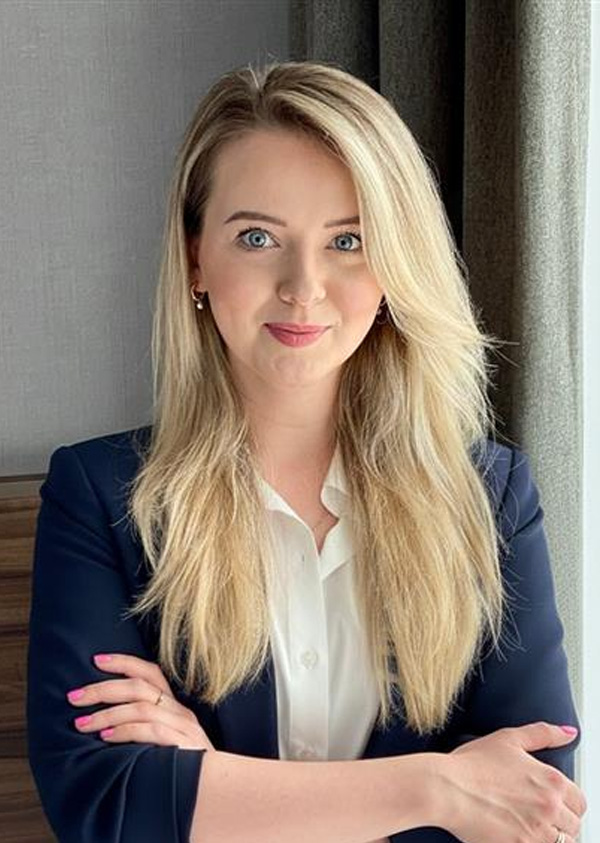
During the fair we had the opportunity to present our new offer of systems for the energy sector, primarily used for energy billing - AUMS Billing Lite and AUMS Billing Smart. The choice of a specific solution is tailored to the expectations of a given company and depends on the size of its business. Independent energy suppliers receive a modern system that meets domestic and foreign market trends and allows for mass and cyclical settlement of electricity, gas fuel or cyclical services and additional goods. Pre-configured systems are offered at a competitive price and implementations last no longer than two months. As a result, the Asseco's offering is attractive for our clients and meets their real business needs, said Jerzy Popowicz, Business Development Director, Asseco Poland.
This year's European Utility Week trade fair was devoted to the areas of digitization, the shape of the energy market taking into account the requirements of low emissions and smart grids. The experts emphasized in their speeches, among others, the fact that the power grid must become more intelligent, which requires the implementation of innovative solutions in the field of big data and data analytics, as well as IoT. The energy market should also be more consumer-centred, offering clients new products and digital energy management tools.

The expansion of the IT service system of the hospital in Lębork with new functionalities will streamline the processes related to the hospital's operations, also in terms of legal requirements for keeping electronic medical records, said Robert Marzec, Sales Manager, Asseco Poland.
The implementation of the AMMS system is planned for the first quarter of 2019.

Thanks to the AMMS system, COZL will improve communication with its patients. They will gain access to electronic registration, will be able to fill in an online questionnaire before a visit to a doctor, and will also receive test results and be able to access to medical documents more quickly. All services will be implemented within the Medical Information Portal.
, said Director of COZL Dr. Jerzy Kuliński.
Additionally, a system will be launched in COZL, which will ensure connection with the Hospital Information System (HIS) from the level of mobile devices through a dedicated application. Asseco will also be responsible for updating and integrating the specialized medical (Cytostatic Laboratory) and administrative (Medical Equipment Register) applications used by the facility with the ERP and InfoMedica administrative systems.
The completion of the implementation is planned for the first quarter of 2019.
***
Asseco Poland is the largest Polish IT company listed on the Warsaw Stock Exchange (WSE). For 25 years it has been creating technologically advanced software for companies and institutions from key sectors of the economy. It is currently the largest IT company in Central Europe and the sixth largest software producer in Europe. It is a leader on the market of IT solutions for health care and a manufacturer of proprietary IT solutions used by over 450 hospitals in Poland, units of the National Health Fund, Blood Donation and Blood Treatment Centres, health resorts, as well as over 14,000 clinics and surgeries. Asseco successfully passed the Connectathon IHE marathon in The Hague in 2018. This is an official confirmation of Asseco's effective interaction with other IT solutions and their compatibility with IHE integration profiles. The use of IHE profiles is recommended by the European Commission and the Centre for Health Information Systems (CSIOZ).

This year's IT@BANK conference was devoted to current IT trends in banking and the impact of new technologies on the development of this sector. Zbigniew Pomianek, Vice President of the Management Board of Asseco Poland, took part in the discussion panel "Technology as a basis for banking business development". The main topic of the debate was the use of new technologies such as artificial intelligence or IoT in banking.
Strategically, one can win the market thanks to costs or a unique value - this is much more difficult because today everyone talks about technologies, so it is necessary to focus on their effective implementation, said Zbigniew Pomianek.
The participants of the panel were also Jarosław Hermann, Member of the Management Board of Bank Millennium; Karol Mazurek, Managing Director - Technology, Client Delivery, Financial Services, Accenture; Jowita Michalska, President of Digital University Foundation and Szymon Wałach, Director of Strategy and Digital Transformation Division and Retail Client Division of PKO Bank Polski.

The study took into account material published in the press, the Internet and social media during the period from July 1, 2017 to June 30, 2018. Over 52 million pieces of information were analyzed in this way. Among software producers, the Asseco brand appeared in various communication channels several times more frequently than the other brands included in the list.
The ranking covered 50 sectors most frequently appearing in the media, and as many as 500 brands were surveyed. 50 companies received the title of Top Brand 2018.
Full list of winners: topmarka.press.pl
.jpg)
They would also like better and faster communication and improvement in the area of e-banking, according to the Asseco Poland report "Corporate Banking today and in the future". The project partner is HSBC Bank Polska.
The objective of the Asseco report was to analyze how the largest Polish companies use corporate banking, as well as to try to define the directions in which it will develop. The report covers 3 main subject areas: use of banking services, cooperation with a bank and new technologies in banking. It is based on an opinion poll conducted among the representatives of companies which cooperate with banks or are decision-makers in this area on a daily basis, including chief accountants, financial directors and members of management boards.
According to the respondents, a bank indisputably has to be safe and react quickly to their needs and inquiries. On a scale of 1-5, both categories were rated at 4.9. It is also important for them whether banks have a comprehensive offer (4.6).
Large companies mean large amounts of funds. It is therefore no surprise that security is the most important attribute of corporate banking. Therefore, the best banking systems which have served business customers for years now definitely stand out from the solutions designed for other customer segments. For example, banking systems offer advanced methods of transaction authorization. The second place was taken by the speed of reaction from a bank. When clients have a problem or need, they expect an immediate response from their financial institution. Therefore, the role of technology is to "watch over" whether a customer's requests are carried out in a timely manner and inform a customer in advance of the steps taken by a bank, said Marta Mróz-Sipiora, Product Manager, Asseco Poland.
Companies have ever-increasing financial needs related to their growth. More than 2/3 of companies see their future not only in Poland, but also abroad. Banks that are able to offer real operational service in many countries will have a significant advantage in the area of servicing companies. This, in turn, means the need to use the right IT structure and global systems, said Sebastian Szaudel, Head of Corporate Banking Department at HSBC Bank Polska.
For the vast majority of the respondents (82%) innovation is an important or very important attribute of a bank. Nearly 50% of companies rated it as important as security, and for 53% it is at least as important as the speed of response from a bank. On the other hand, almost 70% of respondents assessed the importance of innovation at the same level as the comprehensiveness of the offer.
When implementing innovative solutions, banks must take into account regulatory and data management issues. Modern methods of authentication and authorization of orders are an extremely important element limiting all risks. Undoubtedly, companies appreciate the innovations which allow them to streamline their operations and reduce the financial outlays associated with them. The funds saved in this way may be then invested in further development of a company, said Marek Brańka, Deputy Director of the Commercial Banks Division and Director of the Omnichannel Systems Department, Asseco Poland. When observing the market, it can be assumed that technologies and innovations related to corporate banking will be focused on simplification and optimization of product processes. Therefore, an important role in the future of corporate banking may be played by artificial intelligence, which determines the use of companies' money in banking products, as well as digitalization of processes providing end-to-end services, he added.
All respondents declared that they have a dedicated advisor or account manager in their main bank. They expect from the advisors, first of all, professional advice and knowledge of a company's specificity. Over 90% of the respondents value the relationship with their advisor - they consider it important or very important.
The survey shows that for almost 60% of the respondents an advisor is as important as the comprehensiveness and price of the service. An advisor is a person who needs to understand clients, their business and the environment in which their operate. It is an advisor who is responsible for matching a banking offer to a client's needs, as well as for timely delivery of the proposed solutions, said Sebastian Worsztynowicz, Corporate Banking Director at HSBC Bank Polska.
It is very important that an advisor has easy access to all information about a client. Therefore, they should have tools that show a client's actions in different channels and the general situation of a company in an aggregated way, e.g. through generated reports. Operational employees appreciate the fact that an advisor is well versed in a company's situation. It is therefore worthwhile for banks to provide their employees with a quick insight into products, accounts, balances and service processes from all contact channels. On the other hand, executives appreciate the advisory skills of their mentor. It would certainly be helpful for them to have reports that will allow them to diagnose the current situation of a client and, for example, to detect alarming signals, added Marcin Kwilosz, Product Manager, Asseco Poland.
According to corporate clients, e-signature and electronic document workflow are the most desirable and useful among other surveyed solutions. The respondents were interested in automatic placement of cash surpluses based on historical analysis of a company's situation and predictions related to its needs, as well as automatic exchange of currencies based on expected demand and analysis of exchange rate changes. However, in the opinion of the respondents, both solutions require clarification of the form and principles of their functioning.
E-signature and digital document circulation are the needs of companies related to the implementation of a paperless strategy, where traditional handling processes are digitized and become more useful. A customer does not have to fill in the documents and submit them in paper form, and a bank saves time associated with their entry into the systems, proper parameterization and reduces the costs associated with data archiving. Thanks to the use of workflow tools, activities are automated, and thanks to the integration - information goes to the appropriate source systems, said Marta Mróz-Sipiora.
In turn, a dedicated offer, created on the basis of the current situation of a company and the prediction of its future needs, was assessed as an element which should be a standard in corporate banking. It is interesting that video verification, chat/videochat and chatbot are perceived as useless.
The communication between companies and banks is still dominated by a telephone and e-mail. Both channels are able to meet the basic needs for the exchange of information and documentation. However, with the development of technology and the search for cost-effectiveness, new forms of contact should also gain importance, said Sebastian Worsztynowicz.
Majority of representatives of large companies declare that banking services and related processes are fully satisfactory. However, 26% indicated areas that need to be improved. Among this group, the communication with a bank and an advisor was most frequently mentioned (21%). The need for a more flexible approach and a better understanding of a company's specificity was emphasized. The results of the survey confirm the key role of advisors, but they are not the only bank employees with whom contact is made. Therefore, companies are expecting reliable and competent service also from the other representatives of a bank.
The implementation of an omnichannel strategy, which is successfully applied by leading financial institutions, is helpful in achieving this objective. Owing to it, all bank employees have access to the same systems and information, so they are able to provide competent customer service. In turn, customers freely decide which banking service they will use and through which channel of communication. In addition, an activity initiated in one channel is continued in another without any loss of data or quality, said Marcin Kwilosz.
Communication is also related to the need to improve the speed of response from a financial institution (15%). This is a key issue, especially in cases where waiting time for a bank's decision may affect the financial consequences for a company.
This aspect is related to the lack of automation of processes or procedures imposed by law. Many banks are trying to improve their internal processes and procedures by using e.g. RoboticProcess Automation class systems, which automate the most repetitive business processes, said Marcin Kwilosz.
Some respondents (17%) would also like to improve the electronic banking they use. The main problems they point to are lack of transparency, lack of intuitive operation, technical issues and outdated systems.
The report "Corporate Banking today and in the future" is based on an opinion poll conducted by an external research company with the help of telephone interviews (CATI). The survey included 257 interviews with companies employing at least 200 people and with a turnover of at least PLN 30 million in the previous year. The respondents were persons directly cooperating with banks, the so-called operational level (chief accountants, finance directors, etc.) and managing persons, the so-called c-levels (presidents, vice-presidents, management board members). The analysis was prepared on the basis of quantitative methods. Where possible, in the course of the survey, in-depth qualitative information was also obtained to complement the quantitative indicators.
Asseco Poland is the largest Polish IT company listed on the Warsaw Stock Exchange (WSE) and the sixth largest producer of software in Europe. It leads international Asseco Group, which operates in 53 countries and employs over 24,000 people. Creation of IT solutions for banks is one of the key areas of Asseco's business, which offers, among others, central banking systems, as well as omnichannel and mobile solutions which respond to the latest trends in global banking. Owing to the acquired experience and competence, Asseco has implemented its IT solutions (core banking engine) in over 800 banks.
HSBC Bank Polska S.A. is a Polish registered company belonging to the HSBC Group. The HSBC Group is the largest financial institution in Europe, operating on the markets which are Poland's main trading partners (e.g. Germany, France, Great Britain, Italy, the Czech Republic) and one of the largest financial institutions in the world. HSBC Bank Polska S.A. focuses on providing banking services to corporate and institutional customers and treasury operations. HSBC Bank Polska S.A., through its head office located in Warsaw, regional corporate banking centers in Katowice, Poznań and Gdańsk, and a business services centre in Kraków, supports Polish companies in their international expansion and foreign investors in their operations in Poland.
A package of the most important press materials: multimedia, documents and data about Asseco ready to use.


This website uses cookies and other tracking technologies to assist with navigation and feedback, analyze the use of our products and services, support our promotional and marketing efforts, and provide content from third parties. View more cookie settings to manage your preferences.
More information about cookies and data storage can be found in our Privacy Policy.