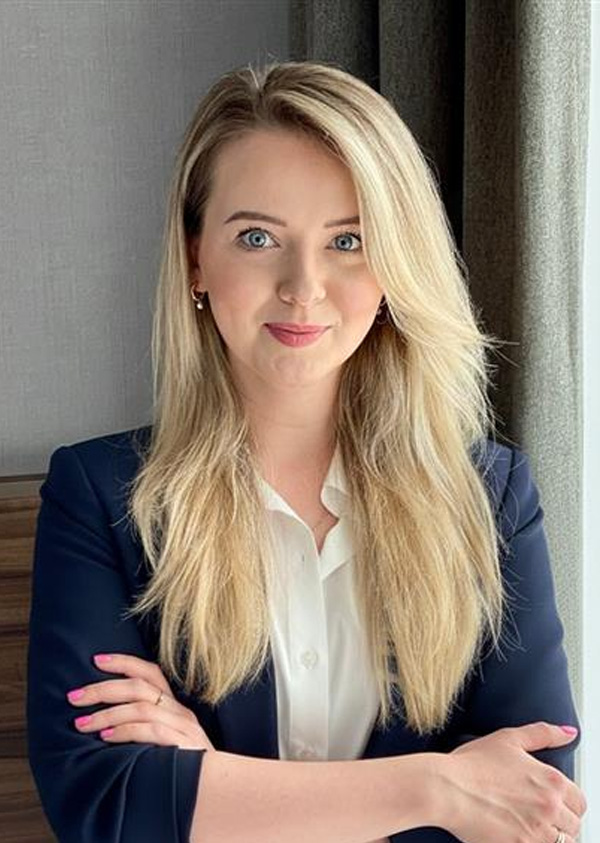
President of Asseco was listed among 50 people who, according to the editorial staff of Dziennik Gazeta Prawna, has had the greatest impact on the Polish economy. The company, headed by Adam Góral, reacted dynamically to market changes and adapted its offer to customer expectations. As a result, Asseco achieved sales revenues of PLN 12.2 billion, which marked an increase by 14% versus 2019.
Asseco has been focusing on sector diversification for years, so that in 2020 the company's revenues were distributed as follows: general business sector - 39%, banking and finance sector - 36% and public institutions sector - 25%. In addition, the company invested in cloud products and launched, among others, the cloud platform Asseco BooX dedicated to financial institutions. The company also continued its acquisition efforts, last year taking over 15 companies in Europe, Israel and the United States.
2020 was a very good year for Asseco. Despite high uncertainty in the market, we managed to improve our results and strengthen our position in all segments and business sectors. Accelerated digitization processes in companies and institutions made us focus on how to best support our customers in the face of the pandemic. We consistently pursued our strategy of strong business diversification - at the level of countries, sectors and products, said Adam Góral, President of the Management Board of Asseco Poland.

Changes occurring on the energy market require significant development and reconstruction of IT systems. Therefore, Asseco Poland is introducing AUMS Billing & CIS 4.0 (a billing and customer service system) which will be a continuation of our previous 3.0 product line and will be adapted to the challenges faced by the Polish energy market. The solution will be made available to all existing customers, within the framework and under the conditions of currently held license agreements.
The energy industry faces many challenges due to the 3D trend of decentralization, decarbonization and digitization. These phenomena are global in nature. In Poland, it is also becoming urgent to support consolidation processes in existing energy groups. Additionally, a number of legal changes related to e.g. the Capacity Market, RES, changes in the Balancing Market and, above all, the establishment of the OIRE and the Central Energy Market Information System will require from customer service systems to undergo dynamic and complex development. AUMS Billing & CIS version 4.0 was developed in response to the changing market requirements, as a result of investments supported by the project co-financed by the National Centre for Research and Development (NCBiR), and in cooperation with a group of domestic and foreign experts.
AUMS Billing & CIS 4.0 is one of the state-of-the-art customer service systems in which significant changes related to technology and business process automation have been introduced. It includes optimizations in the management of work in the system, standardization of data exchange and a number of new functionalities. The system is completely open and gives unlimited possibilities for independent development by power engineering company and in cooperation with external partners (no vendor-locking). The applied technologies enable the use of OpenSource-based databases, and additionally the implemented tools and the adopted multi-cloud and hybrid cloud strategy enable the system to be moved to any cloud of a selected provider.
As a long-standing partner of the energy sector, we realize that nowadays it is crucial to open systems widely and resign from vendor-locking features. This is the only way to react quickly and flexibly to changes occurring on the energy market. On the other hand we want to provide the same flexibility to our customers in the choice of widely understood infrastructure, including cloud or databases. Such an approach guarantees that our customers will be able to cope with the upcoming changes, emphasizes Tomasz Bendlewski, Director of Power and Gas Industry Division at Asseco Poland.
AUMS Billing & CIS 4.0 also offers a number of new functionalities that are primarily related to the possibility of expanding the offer, including convergent products or services. A new data model based on a billing account has also been introduced, where the data of many contracting parties - buyers and recipients - is recorded. As a standard, mechanisms are offered to make settlements of individual recipient's devices within the Internet of Things (OiT).
Functional expansion and digitization of services was another important objective of the implemented changes. It enables our clients to reduce the costs of servicing their customers, e.g. through process automation or work optimization. According to estimates, analyses and expert opinions, these costs may decrease by 30%. If we add a similarly estimated increase in revenues by 20%, e.g. thanks to the expansion in the system of the possibility of selling multiple products and creating convergent offers, the use of our solutions is also economically justified, adds Tomasz Bendlewski.
Via its systems the Asseco Group provides billing to over forty million electricity and gas points of consumption all over the world. In Poland alone over 60% of energy bills are generated by AUMS Billing & CIS. Among domestic entities which have chosen the AUMS billing system are power companies: ENEA, ENERGA, TAURON, PGE, PGNIG OD and leading telecommunications companies ORANGE and POLKOMTEL.

How has the IPO on the Warsaw Stock Exchange (WSE) affected the development of Asseco, how has the company managed to expand its business on international markets, and what has made the company achieve such good financial results in the difficult year of the pandemic - all this was discussed by Rafał Kozłowski, President of the Management Board of Asseco Enterprise Solutions, during the festive celebration of the 30th anniversary of the inaugural session on the WSE. The first session on the WSE took place on April 16, 1991.
We are also thirty years old, as our beginnings date back to the early 1990s. In 2004 we went public and it was a turning point in the development of Asseco, as the capital market enables us to accept a completely different level of risk. The contribution of the capital market and the Warsaw Stock Exchange itself, which organizes trading, cannot be overestimated. Thanks to the money from the stock market we have managed to go beyond the borders of Poland; we bought our first company in Slovakia, and that was the beginning of Asseco. Later on, several listed companies joined our group, we entered the public market with sector or regional leaders. Apart from motivation of managers who ran these ventures, an important element that helped us think about the future, strategy, and long-term financing was the stock exchange.
Being present on the stock exchange is one of the reasons for Asseco's success on international markets.
At present we are able to compete on the international market in virtually any IT segment. The history of Asseco proves that it can be done through everyday work on small or large projects, and such approach ultimately always brings value. While developing this business, we believed that although there was not much capital on the Polish market, there was enough entrepreneurial thinking. Our federation model, i.e. integration of entrepreneurs who have product ambitions and want to produce software for clients, brings results. We have been operating in this way for 30 years and we will continue to do so.
The pandemic has affected all areas of our life. The participants of the event discussed how it affected the operations of individual listed companies, including Asseco.
It has been an interesting period of great uncertainty for us since last March. It became clear very quickly that there was one key word that helped both us and our customers, and that was digitization. Digitization is a way for companies to whom we sell our software to reach customers better and faster. The increased demand for this type of service is what made us able to perform so well financially last year. Digitization has also allowed us to provide work remotely, allowing 95 percent of our employees to stay at home.

"Be EKO with Asseco" and the Asseco's employees charity campaign "We help" were featured in the 19th edition of the report "Responsible Business in Poland. Good practices", which was prepared by the Responsible Business Forum. Asseco's activities were once again included in this list. The publication summarizes the most important issues related to responsible business in Poland in a given year.
Asseco has taken a number of initiatives aimed at taking care of our environment. "Be EKO with Asseco" is a project aimed at raising environmental awareness among our employees through trainings, competitions or information in newsletters. The company operates an Internet platform for sharing observations and submitting ideas on eco-solutions. The company's documentation defines the environmental principles of supplier selection and cooperation. Fluorescent lamps are replaced with LED lamps and devices with higher energy efficiency are purchased. Water dispensers are equipped with timers. The use of paper is reduced in accordance with the principle "If you can, do it digitally" and 100% of paper is Fair Trade certified. The Asseco fleet consists of low emission vehicles. Eco-driving trainings are organized. The company also minimizes the amount of generated waste, and waste generated is collected selectively. In 2012, Asseco was certified for compliance with ISO 14001, and since then, it has annually verified that it meets the requirements of the environmental management system and implemented appropriate changes.
Another Asseco project, namely the Asseco employees' charity campaign "We help", was recognized in the category "Social commitment and local community development". The purpose of this annual initiative is to motivate employees to engage in helping those in need. Employees nominate selected organizations for financial support, e.g. orphanages or single mothers' homes, hospices or foundations supporting poor families. From 2019 onwards, they can nominate pro-environmental initiatives (100% targeted at environmental protection and those which are an element of aid projects of a different nature, e.g. introduction of waste segregation in a given centre). As an important aspect of the campaign is to reach as many people as possible, one of the criteria for selecting beneficiaries is the scale of operation of the organization and the involvement of the employee. Since 2013, Asseco has allocated a total of nearly PLN 1.6 million for this initiative, and 2,000 employees have taken part in the project. Thanks to these funds it was possible to help approx. 4,700 children and 130 families.

Asseco Poland and Chmura Krajowa (Domestic Cloud) are establishing a company called Krajowy Operator Chmury Medycznej (Cloud for Health), which will aim to digitize healthcare and enable medical units to provide e-Services while maintaining the highest security standards. Cloud for Health will specialize in the implementation of electronic medical records (EMD) in the cloud. It will also ensure smooth regulatory compliance and contribute to the standardization of IT services in the healthcare sector.
Cloud for Health will primarily offer EDM in the cloud. The solution will enable the creation, authorization, and collection of individual and collective records with the highest security standards. It will also guarantee their availability and processing 24/7.
Currently, one of the most important technological challenges in the healthcare sector is to provide access to electronic medical records 24/7, which is a regulatory requirement. It is important that this process of processing patient data is highly secure and that it is possible to integrate providers with central systems managed by the Ministry of Health. The maintenance and development of own infrastructure by medical units is time-consuming and expensive. The answer to these challenges are cloud computing solutions, which will be offered by our newly established company, said Krzysztof Groyecki, Vice President of the Management Board, Asseco Poland. EDM in the cloud will improve the availability and efficiency of the healthcare system and allow for cost optimization. The combination of Asseco's experience in delivering advanced IT solutions to the healthcare sector and access to cloud infrastructure provided by Chmura Krajowa will allow us to jointly transform the healthcare sector in terms of technology and bring it to a higher level, he added.
It is crucial to ensure an adequate level of security for the processing of medical data, which is one of the most sensitive categories. Asseco Poland and Chmura Krajowa have teams of cyber security experts and use the latest technological solutions provided by the public cloud, such as the Google Cloud platform. The sum of competencies and well-chosen technology ensure the highest level of protection for patient data, while also ensuring full regulatory compliance including data residency within Poland. This will allow individuals to focus on their tasks, said Dariusz Śliwowski, Vice President of Chmura Krajowa.
The digitization of healthcare allows not only to simplify and accelerate existing processes, but also opens opportunities to build new, innovative services.
With the use of solutions available in the cloud, in the near future it will also be possible to diagnose patients faster, e.g. by using artificial intelligence and machine learning to analyze imaging examination and to detect various types of diseases or anomalies faster - added Dariusz Śliwowski.
Read more: chmuradlazdrowia.pl
***
Asseco Poland S.A. is the largest Polish IT company listed on the Warsaw Stock Exchange (WSE). For 30 years it has been developing technologically advanced software for companies and institutions in key sectors of the economy. It is currently the largest IT company in Central Europe and the sixth largest producer of software in Europe. It is the leader on the market of information technology solutions for the healthcare sector and the producer of proprietary IT solutions used by over 450 hospitals in Poland, ca. 40% of clinics and physician's offices, as well as by the National Healthcare Fund (NFZ) units, blood donation and haemotherapy centers, and health resorts. Asseco's portfolio features: a comprehensive suite of IT systems - Asseco Medical Management Solutions (AMMS), the mMedica solution and mobile patient applications: Home Pharmacy, Medical Information and My Measurements.
Operator Chmury Krajowej Sp. z o. o. (the Domestic Cloud Operator) is a technology company that provides Polish companies and public institutions with access to advanced cloud computing services. Currently it is the most specialized provider of cloud solutions on the Polish market. It operates in the multi-cloud model, offering both its proprietary products and services within the Domestic Cloud Platform and the solutions of its strategic partners, global public cloud providers, Google and Microsoft. Owing to this, its customers have the freedom to choose between the available cloud adoption options. It helps optimize IT processes and costs by reducing project delivery time and increasing operational efficiency. It provides IT architecture migration and transformation services. The foundation of Chmura Krajowa's operations is advanced security both in the sphere of digital safeguards, operating procedures and physical security in data processing centers.

In 2020, Asseco generated sales revenues of PLN 12.2 billion, up by 14% versus 2019. The sales of proprietary products and IT services increased, compared to the previous year, by 11% and amounted to PLN 9.6 billion. Consolidated operating profit exceeded PLN 1.2 billion, and net profit attributable to shareholders of the parent company stood at PLN 402 million, which in both cases represents an increase of 25%. The Group recorded significant increases of results in all segments and sectors of its operations.
Last year, non-IFRS operating profit totaled PLN 1.5 billion, up by 23% on annual basis, and non-IFRS net profit reached PLN 454 million, which marked an increase of 24% versus 2019.
The Group generated better results across all of its operating segments, owing to its consistently implemented growth strategy and the accelerated digitization process of companies and institutions triggered by the pandemic. In 2020, foreign markets represented by the Formula Systems and Asseco International segments accounted for 88% of the Group's total revenues. The sales of the Formula Systems segment increased by 15% to PLN 7.6 billion, while operating profit improved by 30% to PLN 615 million. The Asseco International segment's sales revenues surged 10% to PLN 3.2 billion while its operating profit improved by 12% to PLN 389 million. The sales of the Asseco Poland segment reached PLN 1.4 billion, up by 18% year-on-year, while its operating profit was 40% higher and amounted to PLN 215 million.
Asseco's revenues, which were very well diversified by sectors in 2020, were distributed as follows: general business - 39%, banking and finance - 36% and public institutions - 25%.
2020 was a very good year for Asseco. Despite high uncertainty on the market, we managed to improve our results and strengthen our position in all segments and business sectors. Accelerated digitization processes in companies and institutions made us focus on how to best support our customers in the face of the pandemic. We consistently pursued the strategy of strong business diversification - at the level of countries, sectors and products. Selling our proprietary software and providing related services remained crucial for us, the same can be said about increasing the scale of our business through further acquisitions. Last year we were joined by 15 new companies which helped reinforce our position on foreign markets, said Adam Góral, President of the Management Board of Asseco Poland.
Asseco's consolidated order book for 2021 in the area of proprietary software and services is now worth PLN 7.6 billion and is 13% higher than in the same period last year.
While thinking about our development prospects we are aware that the economy is in a difficult situation; therefore, we approach the future with moderate optimism. Our goal is to maintain a leading position in the sectors that are strategic to Asseco: banking, insurance, power industry, telecommunications, healthcare and public administration. We focus on further development in the area of proprietary products and services. Apart from sector solutions, our priorities include ERP systems, payments and trust services. We will invest in the development of cloud products and cyber security services. We want to further grow through acquisitions and strengthen our competencies in specific sectors. We are interested in companies similar to Asseco: with their proprietary products, stable financial standing, operating in similar sectors, whose owners would like to stay with the company after the acquisition and develop it together with us, added Adam Góral.
Asseco consistently builds value for shareholders and shares its profits with them. The Company's Management Board has decided to change its dividend policy from the current "10% to 40%" to a new one: “more than 50% of profit”. This year it is recommending a dividend payout of PLN 258 million from 2020 profit, which translates to PLN 3.11 per share and represents 64% of the Group's consolidated net profit.
Non-IFRS figures including adjustments for: the cost of amortization of intangible assets recognized under the combination settlement (PPA), the costs of share-based payment transactions with employees (SBP), the costs and financial revenues resulting from the transactions of purchase and sales of companies (M&A) and tax effects associated with them).
A package of the most important press materials: multimedia, documents and data about Asseco ready to use.


This website uses cookies and other tracking technologies to assist with navigation and feedback, analyze the use of our products and services, support our promotional and marketing efforts, and provide content from third parties. View more cookie settings to manage your preferences.
More information about cookies and data storage can be found in our Privacy Policy.